
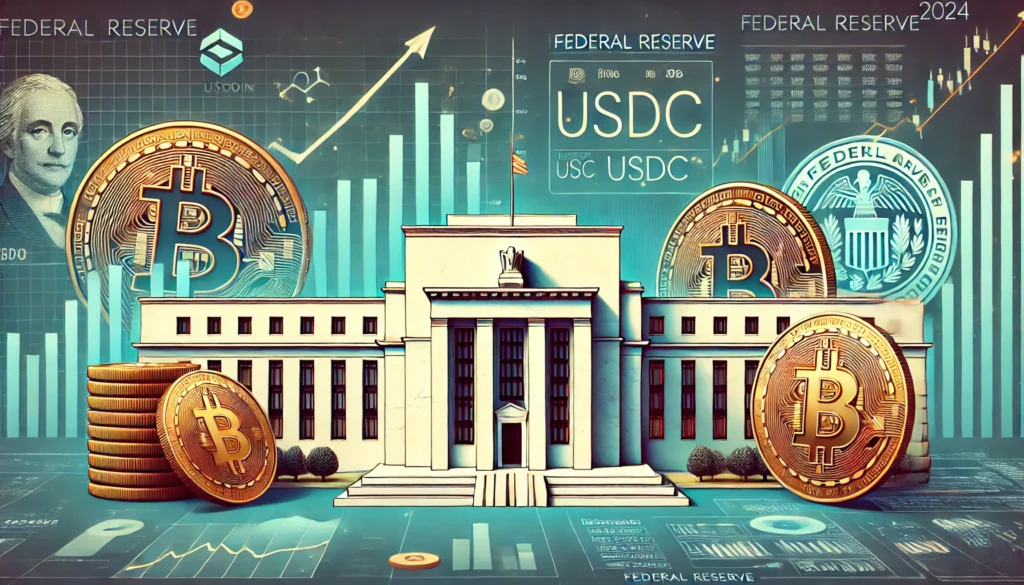
The financial world stands at a crossroads. Bitcoin has gone from a niche digital asset to a serious player in global finance. Meanwhile, the U.S. dollar has long been the uncontested global currency — central to trade, reserves, and global liquidity. As we head into the next decade, the question grows: Which will dominate the future of money — Bitcoin or the Dollar?
Here’s a nuanced look at where both stand now, where each could go, and what it might mean for investors and the global economy.
1. The Rise of Bitcoin
Bitcoin has rapidly evolved from speculative asset to something many see as a store of value, and potentially a global digital currency. Key factors fueling its ascent:
- Fixed supply & scarcity — There will ever only be 21 million BTC. This capped supply is often cited as a hedge against inflation and currency devaluation.
- Decentralization & independence from governments — Bitcoin operates without central banks or direct government control, making it less vulnerable to fiat monetary policy.
- Growing institutional adoption — More companies, funds, and investors view Bitcoin as a digital store of value or “digital gold” especially in times of fiat uncertainty.
- Potential inflation hedge — Some analyses suggest Bitcoin may function as a hedge against currency debasement or inflationary pressure.
Why it matters: If Bitcoin continues to build trust, adoption and utility — its scarcity + global reach could make it a serious contender as a “digital money” alternative, especially in economies feeling the strain of inflation or currency instability.
2. Why the U.S. Dollar Still Holds Major Power
Despite Bitcoin’s appeal, the U.S. Dollar remains deeply entrenched in global finance — and for good reason. Its strengths include:
- Global reserve dominance: As of 2024-2025, about 56–58% of world’s official foreign exchange reserves are held in dollars, far more than any other currency.
- Widespread liquidity and acceptance: The dollar is used in nearly all global trade, commodities, finance, and international transactions — making it the backbone of global commerce.
- Stability & trust backed by government and institutions: As fiat money with central-bank backing, the dollar benefits from legal frameworks, global acceptance, and economic scale that cryptocurrencies currently lack.
- Monetary-policy tools: The issuing government (via the Federal Reserve) retains the ability to manage supply, influence interest rates, and respond to economic crises — giving the dollar flexibility that Bitcoin lacks.
Why it matters: For global trade, large-scale finance, cross-border payments, and everyday economic stability — the dollar remains hard to dethrone. Its deep liquidity & structural support keep it at the heart of global commerce.
3. Head-to-Head Comparison: Bitcoin vs. The Dollar
| Feature / Attribute | Bitcoin (BTC) | U.S. Dollar (USD) |
|---|---|---|
| Supply | Fixed at 21 M — capped supply | Unlimited, managed by central bank |
| Volatility | Very high — price swings are common. | Low relative volatility, widely accepted as stable |
| Decentralization / Control | Yes — distributed ledger, no central authority. | No — controlled by government and central bank |
| Use Cases | Store of value, digital transfers, cross-border payment potential, hedge vs fiat weakness | Global trade, savings, everyday spending, denominating contracts and debt, reserve currency |
| Inflation Risk | Very low — fixed supply gives resistance to inflation of the asset. | Subject to inflation and monetary policy decisions |
| Liquidity & Global Acceptance | Improving, but still limited compared with fiat currencies; adoption uneven. | Very high — accepted nearly everywhere globally; core to global financial infrastructure |
Insight: Bitcoin offers appealing properties — scarcity, decentralization, and resistance to money printing — but also comes with high volatility and uncertainty. The dollar offers stability, deep liquidity, and institutional support — but remains vulnerable to inflation and policy decisions.
4. What Could Shift the Balance — Key Drivers to Watch
Over the next decade, several factors could tip the scales — either towards Bitcoin (or other cryptos) or back in favor of the dollar:
🔹 Drivers Favoring Bitcoin
- Increased adoption & institutional investment: If more governments, corporations, and investors add Bitcoin to reserves or balance sheets — its legitimacy could rise significantly.
- Loss of confidence in fiat due to inflation or monetary expansion: If inflation erodes value of fiat or central bank policies cause distrust, Bitcoin’s fixed supply could make it attractive as a safe value store.
- Technological improvements / infrastructure growth: If blockchain networks and Layer-2 solutions improve scalability, speed, and ease of use — making Bitcoin (or other cryptos) practical for everyday transactions.
- Global diversification away from the dollar: As some countries explore reducing reliance on the dollar for reserves, trade, or debt — crypto (or alternative currencies) may see increased use.
🔹 Drivers Strengthening the Dollar & Fiat System
- Regulatory & legal support: Governments backing the fiat system, enforcing regulations, and limiting crypto adoption can preserve dollar dominance.
- Deep liquidity, financial infrastructure & global trust: Global trade, central banks, and institutions remain set up around the dollar — replacing that overnight is hard.
- Stability and predictability: For large-scale finance, corporate earnings, international commerce — the refusal to accept extreme volatility remains a strong advantage for fiat.
- Policy and monetary tools: Central banks can respond to crises, manage inflation, and steer economies — flexibility fiat currencies enjoy, crypto largely lacks.
5. What This Means for Investors and Individuals
Rather than seeing this as a binary “BTC wins vs USD wins,” many investors may benefit from a hybrid, diversified approach. Here’s how you could think about positioning in the coming years:
Strategic Takeaways:
- Diversify across asset classes: Holding a mix of fiat savings, crypto exposure, and maybe even inflation-resistant assets (gold, real estate) helps balance risk and upside.
- Treat Bitcoin (or crypto) as a speculative/inflation-hedge component — not all savings: Its high volatility means it’s less suitable as a stable store of daily purchasing power — more as a long-term value bet.
- Stay informed on regulation, macroeconomic trends, and global monetary policy: Changes in laws, monetary policy, or reserve-currency sentiment can shift the balance rapidly.
- Use long-term perspective: If you believe in decentralized digital money long term, consider allocating a portion of holdings — but be prepared for swings.
- Balance liquidity and risk: Keep enough in stable fiat assets (or equivalents) to manage expenses and emergencies, while investing a portion in higher-risk/higher-upside assets.
6. The Bottom Line: A Multipolar Future Rather Than a Single Winner
The “Bitcoin vs. Dollar” debate often frames the future as a zero-sum game — but the reality may look more like multipolar money.
- The dollar likely remains dominant for global reserves, trade, and everyday finance for at least the near-to-medium term.
- Bitcoin and other digital assets may carve out a growing niche — as a store of value, inflation hedge, or alternative financial system — especially for individuals, innovators, or those in economies stressed by fiat instability.
- Other currencies (fiat or digital), stablecoins, and diversified global financial instruments may also play increasing roles, leading to a more diversified global monetary ecosystem.
In short: the future of money may not be about a single winner — but a broader, more flexible system where multiple forms of money coexist and serve different needs.
Short Webography / References
“Bitcoin as a Hedge Against Inflation: Evidence from Emerging Markets,” Solomon Oye et al. (2025). ResearchGate+1
“The International Role of the U.S. Dollar – 2025 Edition,” Federal Reserve. federalreserve.gov+1
“U.S. Dollar Share of Global Reserves Hits 56% — Lowest in Decades,” BestBrokers.com (2025). MejoresBrokers.com+1
“Why Bitcoin Is Seen as a Hedge Against Inflation and Currency Debasement,” 21Shares Research (2025). 21shares+1
“Bitcoin’s Volatility and Its Limits as a Currency or Safe-Haven,” Baur et al. (2021). PMC+1